An Era Where Cars Can Be "Analyzed" by AI: Where Do We Draw the Line to Protect Lives?
We have entered an era where individuals can use AI to analyze and control vehicle systems. Because these technologies are so fascinating, we must distinguish between what is "possible to do" and what "should be done" when it comes to matters of life and death.
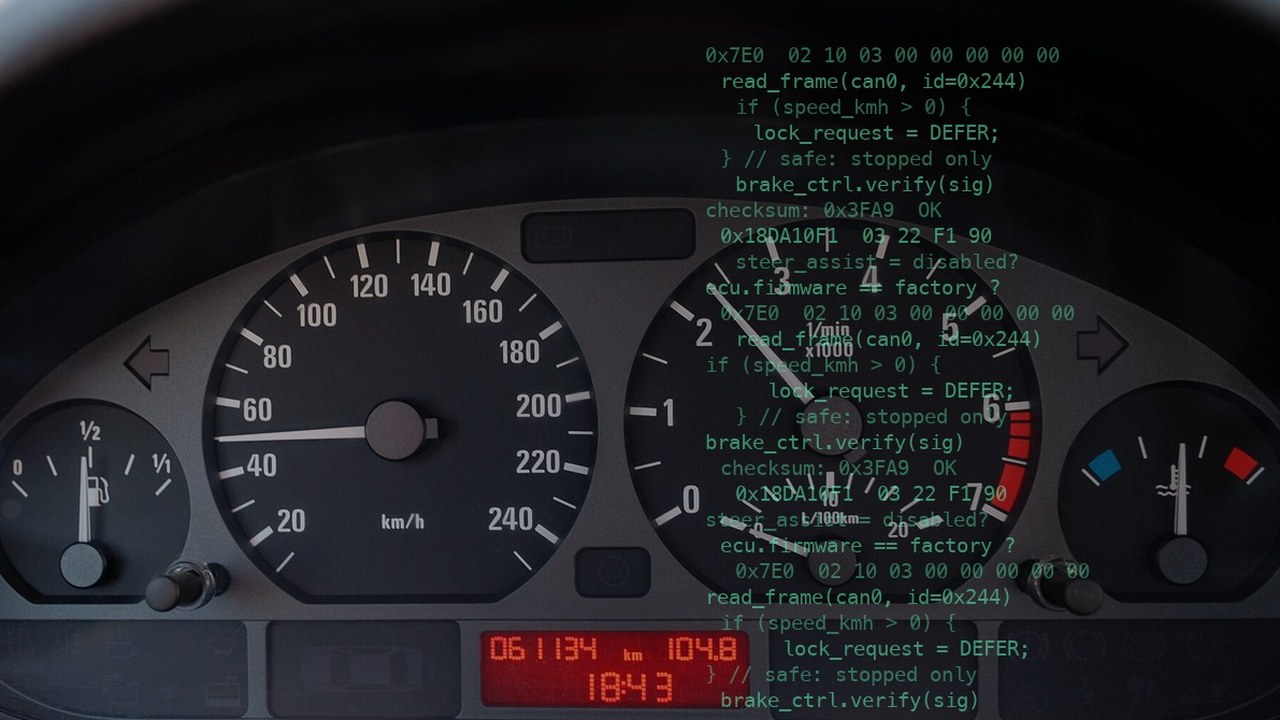
Hello. I am Debitto Lozano, CEO of MetAI LLC.
The other day, I came across a very intriguing post on X (formerly Twitter).
AI "analyzed" a 32-year-old Jeep
https://x.com/zulali/status/2120204711790023128
In a post from November 10, 2026, it was written in English:
"Claude reverse engineered my 32-year-old Jeep. Then it started controlling it."
I watched the approximately 10-minute video. Apparently, it all started because a 1994 Jeep Cherokee failed an emissions test in California.
*Reverse engineering: The process of analyzing a finished product to investigate its internal mechanisms.
With the help of the AI "Claude Code" and "Codex" (OpenAI's AI), the poster is doing the following:
• Wiring a small microcontroller costing about $3 to read data from the old car's computer
• Continuously recording the engine's status while driving
• Copying the entire program inside the computer to examine it
• Finally, writing and running their own program onto the car's computer
As a result, they reportedly passed the emissions test.
One scene in particular left an impression. The AI suggested, "Let's try running the fuel pump," and it actually did so. The pump continued to run for about 10 seconds, and the poster hurriedly pleaded, "Stop." The poster himself remarked that this was the moment it shifted from "just reading" to "the AI controlling the car."
To be honest, at first, I thought, "That's amazing." Wanting to save on inspection and repair costs, and wanting to understand your own car—as an engineer, I understand that feeling well.
Until recently, this was a task that required specialized knowledge, tools, and time. Now, with AI, an individual can take on the challenge. It is a massive change.
But at the same time, I also thought, "If this hadn't been a car, it would have just been an interesting story."
Cars are different from smartphones and PCs
If a smartphone app crashes, you can just restart it. But cars are different.
Brakes, steering, and driving assistance such as automatic emergency braking and lane-keeping. A single error in these controls could lead to a fatal accident.
What the video showed was the control of fuel and the engine area. It was not the brakes or the steering. Even so, I believe we must take seriously the fact that the AI was able to operate the fuel pump based on its own judgment. What if the same thing happened in a part of the car even closer to human life?
Furthermore, it is not just the driver who suffers the consequences. It involves family members riding as passengers, pedestrians crossing the street, cars driving immediately behind, and even people who have no idea what is happening.
In 2015, two security researchers demonstrated that a Jeep Cherokee could be operated remotely, leading to a recall of approximately 1.4 million vehicles. Even research that was published responsibly became such a massive issue.
Now that AI has lowered the barrier to analysis, more people might try things without testing or safety confirmations. That is what I am most worried about.
Three Mechanisms Required of Manufacturers
1. Detecting Modified Systems
A mechanism that allows the vehicle itself to realize that its software has been rewritten.
2. Locking Only While Parked or Before Starting the Engine
This is a crucial point. Even if a modification is detected, forcing a vehicle to stop suddenly while driving would be dangerous. Locking should occur while the vehicle is stationary or before the engine is started. I believe a safe timing must be chosen.
3. Reverting to a State Tested by the Manufacturer
The ability to reset to the factory-default software that the manufacturer has verified as safe. It is important to provide a way to return to the "original safe state" (moto no anzen na joutai).
New vehicles are already subject to UN-R155 and R156, which are international regulations for cybersecurity and software updates, and these have already been implemented in Japan. However, these do not fully cover older vehicles or cases where owners modify them themselves.
It is not that I want to deny the "Right to Repair"
Recently, the concept of the "Right to Repair" has been gaining traction. It is a movement aimed at ensuring that products people buy can be repaired by parties other than the manufacturer. I am in favor of this idea.
What I want to protect are "safety-critical components" (anzen ni kakawaru bubun), such as brakes and steering, as well as parts that affect the people and environment around us, such as exhaust emissions. Changing the appearance of a car navigation system and rewriting brake controls may both fall under the umbrella of "modification," but they have entirely different implications.
MetAI is a company that creates AI and software. That is precisely why there is something we constantly remind ourselves:
Only deploy what has been tested and confirmed to be safe.
Thanks to AI, the process of creation has become incredibly fast. However, "it works" and "it is safe" are two different things.
As technology advances, the line between "what can be done" and "what should be done" becomes increasingly important. And it is not AI, but we humans, who must draw that line.
What do you think? To what extent do you believe people should be free to tinker with their own car's systems? Please let me know in the comments.
References
• Original post (X): https://x.com/zulali/status/2120204711790023128
• Chrysler Recalls 1.4 Million Vehicles After Jeep Hacking Demo(Dark Reading):https://www.darkreading.com/vulnerabilities---threats/chrysler-recalls-14-million-vehicles-after-jeep-hacking-demo-/d/d-id/1321463
• Chrysler's recall of hackable cars won't be the last(MIT Technology Review):https://www.technologyreview.com/2015/07/24/167011/chryslers-recall-of-hackable-cars-wont-be-the-last/
• NEC Mobility Column (Timing of UN-R155/R156 application): https://jpn.nec.com/nsi/ss/mobility/column/03/index.html
🧪 Trial section. Opinion piece originally published in Japanese on note.com and translated into English and Spanish for everyone.
Read the Japanese original on note (MetAI) ↗More in Other
- How I turned a 10,000 yen photo frame into a custom dashboard for my home
- Exhibited at NIIGATA AI EXPO 2026: AI Virtual Humans running on a single PC received a huge response
- Speaking at the Itabashi Industrial Fair on November 5 and AI BEYOND 2026 on November 6
- The era of choosing sref after seeing it: Free directory "Sref Explorer" released
- Get Daily AI News Without the Hype: MetAI Launches "AI Tsushin"